
If you’ve recently earned your amateur radio license or are exploring different operating modes, you’ve probably heard experienced operators talk about CW, or Continuous Wave. More commonly known as Morse code, CW has been a cornerstone of radio communications for well over a century. While it may seem intimidating at first, learning CW is one of the most rewarding skills you can develop as a radio amateur.
The good news? You don’t need to memorize the entire Morse code alphabet overnight, and you certainly don’t need to be a speed demon. Every accomplished CW operator started exactly where you are now.
What Is CW?
CW is a mode of communication where information is transmitted by turning a radio carrier on and off. The resulting pattern of short and long signals—called dots (dits) and dashes (dahs)—represents letters, numbers, and punctuation.
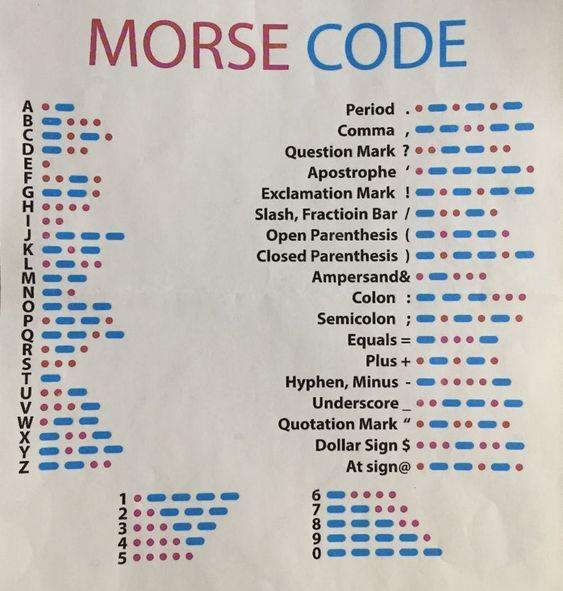
Unlike voice communications, CW requires very little bandwidth and can often be copied when voice signals are unreadable.
Why Learn CW Today?
Some people assume Morse code disappeared when it was no longer required for amateur radio licensing. In reality, CW remains incredibly popular for several reasons.
It Works When Other Modes Don’t
Because CW occupies only a small portion of the radio spectrum, it can often get through heavy noise, fading, or weak propagation better than voice communications.
Many operators regularly make contacts across continents using only a few watts of power.
It’s Great for QRP
Low-power (QRP) operators love CW because efficient communication allows remarkable distances with modest equipment.
Imagine making a contact from Pennsylvania to Japan using only 5 watts—that’s not unusual on CW.
It Makes You a Better Operator
Learning CW naturally improves your understanding of:
- Band conditions
- Signal reports
- Operating procedures
- Listening skills
- Timing and patience
Many operators find that after learning CW, their overall radio skills improve dramatically.
It’s Simply Fun
There is something uniquely satisfying about carrying on a conversation using nothing more than simple tones. Many operators describe CW as almost musical once they become proficient.
Is Morse Code Difficult?
Not really.
The biggest misconception is that Morse code must be memorized like a chart.
Successful operators don’t translate dots and dashes into letters in their heads. Instead, they learn to recognize the sound of each character as a complete unit.
Think about learning a new language—you don’t spell every word in your head before understanding it. CW works much the same way.
How to Start Learning
Learn the Sounds
Focus on hearing each letter rather than counting dots and dashes.
For example:
- A sounds like di-DAH
- N sounds like DAH-dit
- R sounds like di-DAH-dit
Learning by sound builds much faster recognition.
Practice a Little Every Day
Consistency beats marathon study sessions.
Even 10 to 15 minutes per day can produce noticeable progress over a few months.
Learn at Full Character Speed
One of the best methods is the Koch Method, where characters are sent at full speed (typically 20–25 words per minute), but with extra spacing between them.
This teaches your brain to recognize the sound of each letter instead of counting individual dits and dahs.
Start Copying Real QSOs
Don’t wait until you think you’re “good enough.”
Spend time listening to CW on the air.
You’ll quickly begin recognizing common words and abbreviations.
Essential CW Equipment
Getting started doesn’t require expensive equipment.
You’ll need:
- An HF transceiver capable of CW operation
- A straight key, paddle, or bug
- A keyer (often built into modern radios)
- Headphones (recommended)
- A notebook or logging software
Many modern radios, including the Yaesu FTdx10, IC-7300, FT-891, and similar radios, include excellent CW features such as adjustable sidetone, electronic keyers, filtering, and decoding aids.
Common Beginner Abbreviations
CW operators use many abbreviations to speed communication.
Some of the most common include:
| Abbreviation | Meaning |
|---|---|
| CQ | Calling any station |
| DE | From |
| K | Go ahead |
| BK | Break |
| R | Roger / Received |
| TU | Thank you |
| UR | Your |
| HW? | How? |
| WX | Weather |
| QTH | Location |
| QRM | Interference |
| QRN | Static or natural noise |
| QSB | Signal fading |
| QRP | Low power |
| QRO | High power |
| 73 | Best regards |
| 88 | Love and kisses (generally used with close friends or family) |
You’ll quickly discover that these become second nature.
Your First CW Contact
Your first QSO doesn’t need to be perfect.
A typical beginner exchange might look like this:
CQ CQ CQ DE NI3N NI3N K

NI3N DE W1ABC

W1ABC DE NI3N GM TNX FER CALL
UR RST 579 579
QTH UNIONTOWN PA
NAME MAC
HW? BK

NI3N DE W1ABC
RST 589
QTH MAINE
NAME JIM
FB CPY
73

W1ABC DE NI3N
TNX FER QSO
73 SK
Notice how simple the conversation is. Most CW contacts follow a predictable structure, making them easier to copy than many beginners expect.
Mistakes Are Part of Learning
Every experienced CW operator has:
- Missed characters
- Sent the wrong letter
- Forgotten abbreviations
- Asked for repeats
- Been nervous during their first contact
That’s completely normal.
The amateur radio community is generally very supportive of new CW operators, and most experienced operators are happy to slow down for beginners.
Helpful Practice Resources
There are many excellent free resources available to help you learn: ( I personally like The Long Island CW Club )
- Learn Morse Code – CW with The Long Island CW Club
- LCWO (Learn CW Online) for structured lessons and practice.
- Morse Code Ninja for listening practice at different speeds.
- CW Academy for instructor-led online courses.
- Morse Mania (mobile app) for daily practice.
- Morse Machine for learning characters by sound. ( just search Google Play or Apple App Store )
Mixing several learning methods keeps practice interesting and helps reinforce your progress.
Final Thoughts
CW is more than just another operating mode—it’s a tradition that continues to connect amateur radio operators around the world. Whether your goal is making long-distance contacts with low power, participating in contests, activating parks, or simply challenging yourself with a new skill, learning Morse code opens up a rewarding side of the hobby.
Don’t worry about speed. Focus on consistency. Celebrate small milestones, whether it’s recognizing your first ten letters, copying your first callsign, or completing your first CW QSO.
One day you’ll realize you’re no longer hearing dots and dashes—you’ll simply be hearing words.
That’s when the magic of CW truly begins.
73, and I hope to hear you on the key someday!